By Suzanne Braun Levine,
Ms. Editor, 1972- 1988
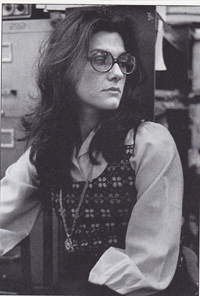 I was interviewed recently for an article about the early days of Ms. magazine, which is about to be forty years old. Soon after that I was interviewed for an article about Our Bodies, Our Selves which was first published around the same time. When thinking about those days and looking at some photographs, my first thought is How Young We Were! And my second is How Brave We Were! Now I have another thought: How Lucky We Were! to be there.
The anniversaries of other empowering moments from the early days of the women’s movement are accumulating. They range across the spectrum from entertainment to sports, to health to legislation to mind-opening books that went where women were not supposed to go. It is amazing to look back four decades – one of the mixed blessings of Second Adulthood – but when the events are as momentous as the emergence of a movement, it is also humbling.
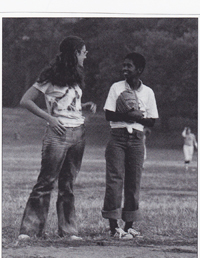 I started working on Ms. with the first monthly issue – Wonder Woman was on the cover. I was pretty up tight in those days; I wore a pink silk shirt and pink pencil skirt to work the first day. Over the seventeen years I was there, I learned a bit about casual dressing and a lot about women and about myself. I would not be the person I am today had I not gotten that job. And I certainly wouldn’t have had the expertise to draw on when I started writing about Second Adulthood.
Ms. reported on the breakthroughs – both personal and political – and staffers participated in many. My responsibilities kept me in the office making editorial decisions for each issue and working with a multitude of experienced and first-time published writers. Keeping the magazine on schedule was not always an easy job with so many editors and writers traveling to demonstrations, events and fundraisers.
In 1981 I took on an additional project (where did I get the chutzpah?); I produced a documentary history of a century of brave women – an hour-long Ms. Special for HBO called “She’s Nobody’s Baby: American Women in the Twentieth Century.” It won a Peabody Award, the first of many for HBO. A recent biography of Gloria Steinem, also on HBO, highlighted the early days of the magazine (how young we look!) That it was produced by the same ceiling-shattering woman executive, Sheila Nevins, is a wonderful touch of continuity.
Later milestones include Anita Hill’s testimony at the Clarence Thomas confirmation hearings. She showed amazing courage by speaking truth to power, and although she lost the battle (he was confirmed), she won the war for recognition of sexual harassment at work. Next week her legacy will be the subject of a conference called “Sex, Power and Speaking Truth: Anita Hill 20 Years Later.” One of the conveners is a Ms. colleague, Letty Cottin Pogrebin, who like many of the brave women who led the movement is still on the frontlines of change.
Those hearings bring back a personal story. Because of my connection with Ms. I was invited to be one of several commentators in the continuing coverage with Peter Jennings. I don’t remember what else I said, but I do remember I got a lot of points for a wry observation I made about the fact that people across the country were gathered around their TVs in offices and public places. “Well, one thing is for sure; there is a lot less sexual harassment going on at this moment.”
Humor – often black humor like that – was a vital ingredient in the Ms. experience.
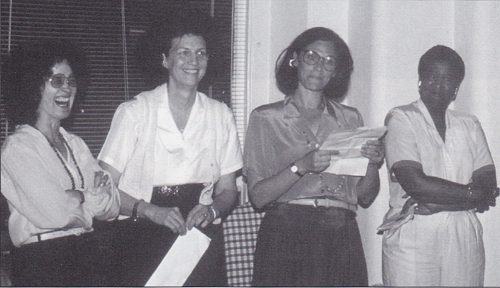
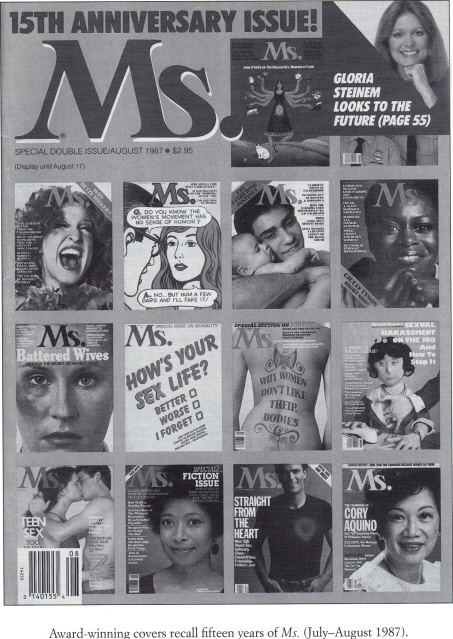
I don’t think any of us could have done what we did without the laughter we shared. One of my favorite Ms. covers was an illustration of a man and a woman [find it below]:
Q. [Male] “Do You Know The Women’s Movement Has No Sense
Of Humor?” says his balloon.
A. [Female] “No! But Hum A Few Bars And I’ll Fake It!” says hers.
Photos: INSIDE Ms.: 25 Years of the Magazine and the Feminist Movement, by Mary Thom (Henry Holt, 1997)